Regional guide
Earn local relevance without publishing thin city pages.
A practical North Bay guide for businesses that need their website to explain real coverage, show credible proof, and turn a local search into a confident inquiry.
Local businesses often feel pressure to make a separate page for every community they serve. That can create a messy experience: nearly identical pages, vague promises, and no meaningful reason for someone in one town to choose the business over another.
Instead, begin with what is true and useful. Explain the services, show the work, define the coverage honestly, and add city-specific content only where a real local point of view exists. A city guide, a project story, a specialized service, or a set of verified examples can all justify a focused page.
That approach respects the visitor and creates a stronger foundation for local search. It also gives the business a clearer publishing roadmap: improve the regional hub first, then build supporting pages only where the evidence is real.
A practical framework
Three checks before a local page goes live
Start with a real service footprint
Publish the places your business actually serves only when they help a visitor make a decision. A clear service-area section, useful coverage details, and distinct local examples are stronger than a long list of interchangeable city names.
Pair services with evidence
Local relevance should be earned with helpful service explanations, project work, credentials, team knowledge, or client examples. That gives visitors useful context and helps search engines understand what the business genuinely does.
Give each audience a clear next step
The person comparing a trusted advisor, contractor, wellness provider, or retail experience needs a fast answer to a different question. Good local websites make the next step feel obvious without treating every visitor the same.
Regional case studies
Local proof takes different forms.
These live examples show how a site can lead with a distinctive service, audience need, professional trust, or local retail point of view.
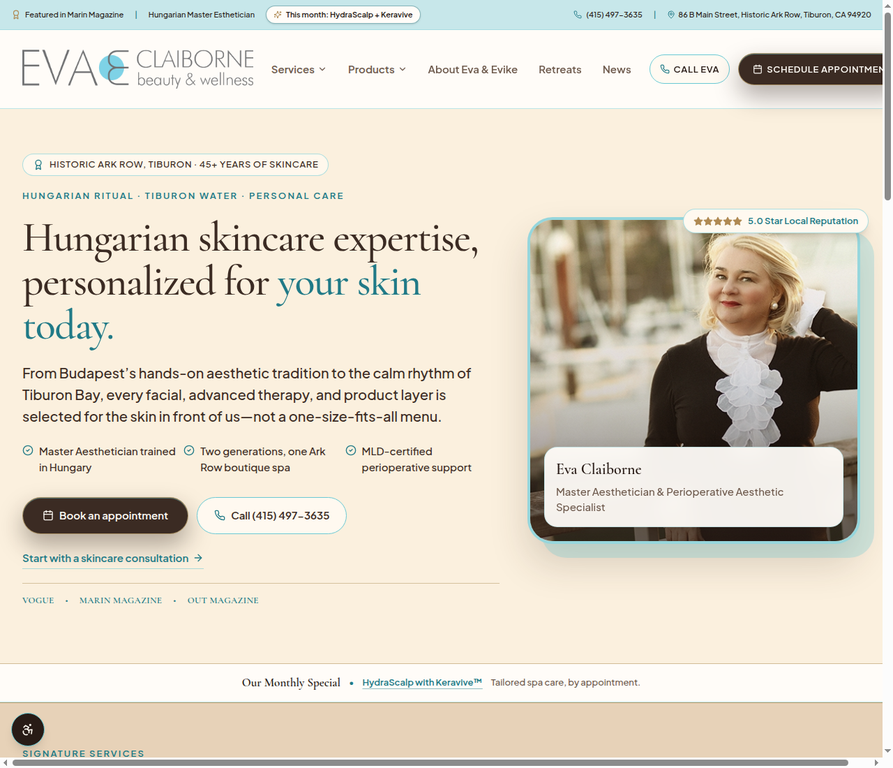
Tiburon · Beauty & Wellness
Tiburon Skincare Studio
A boutique skincare and wellness experience that makes bespoke care, advanced therapies, and a personal point of view easy to understand.
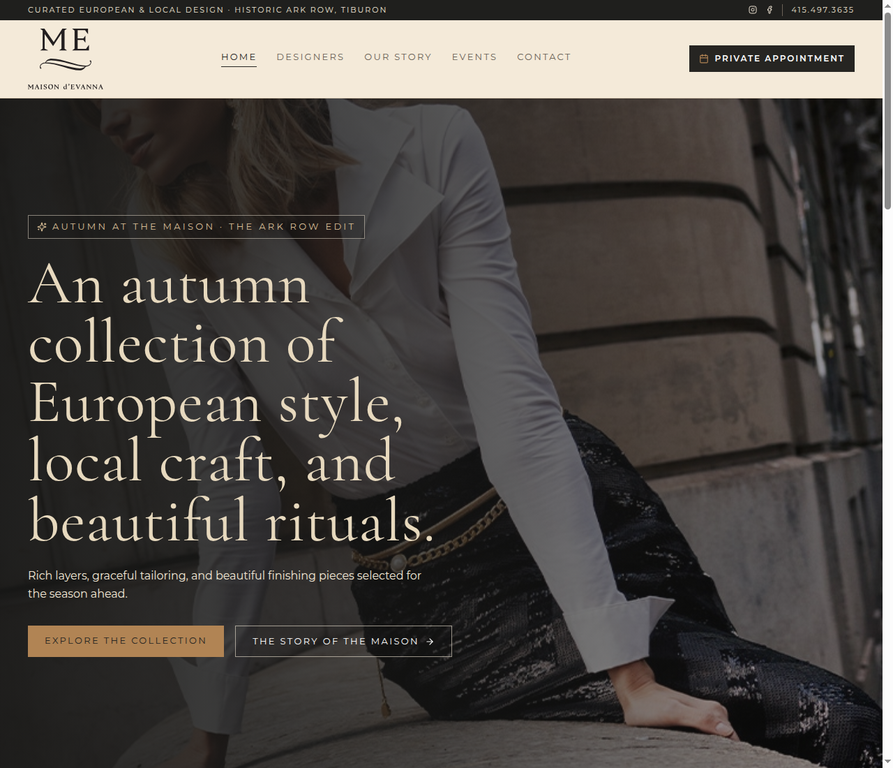
Tiburon · Retail & Boutique
Maison d’Evanna
A European-style Tiburon boutique that brings a distinct retail point of view, carefully curated collections, and the Historic Ark Row setting forward.
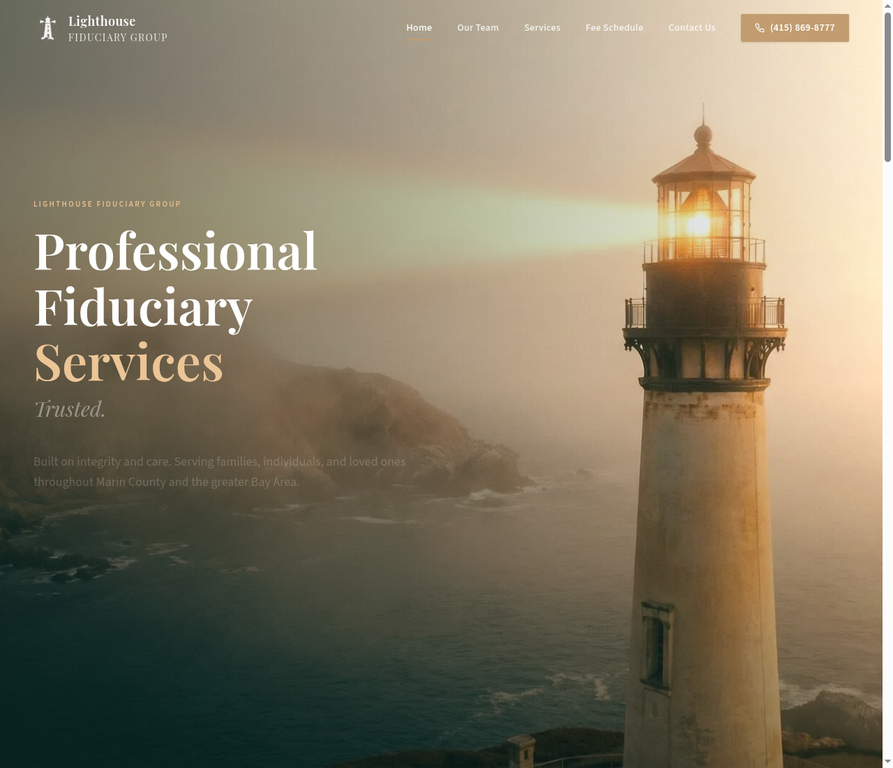
Marin County · Professional Services
Lighthouse Fiduciary Group
A clear, trust-forward website for fiduciary services across Marin County and the Bay Area, built around sensitive decisions and professional credibility.
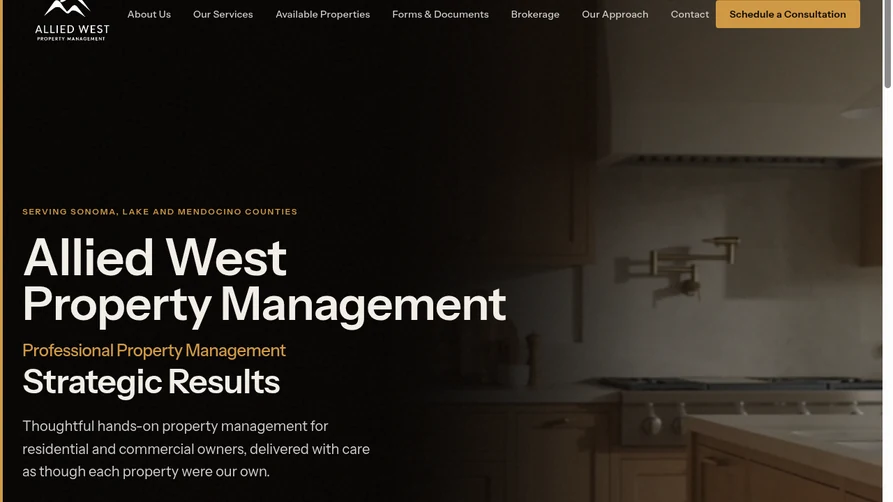
Sonoma County · Property Management
Allied West Property Management
An owner-focused property-management site for residential and commercial clients across Sonoma, Lake, and Mendocino Counties.
Questions, answered
Build a stronger local content plan
Should my North Bay business create a page for every city it serves?
Not by default. Create a city-specific page when it has its own useful point of view, verified local work, distinct services, or substantive information for that audience. Otherwise, keep service-area content consolidated and helpful.
What should a local website guide include?
A useful guide explains how visitors should evaluate a service, how the business serves its real market, and what evidence makes the business credible. It should add value beyond repeating a location name in headings.
How can I measure which local pages generate inquiries?
Use a consistent market label on the inquiry path and review successful form submissions by that label. This shows which public pages produce completed free-preview requests without inferring a visitor’s precise location.
Start with a local story that is actually yours.
Share your current website or business details, and we’ll create a free custom preview around your services, audience, and genuine service footprint.
Get my free website preview